Hydro Jetting in Bedford, TX
Bedford's mid-century homes run on cast iron — and cast iron's defining trait is scale. Sixty years of corrosion and mineral deposits narrow and roughen the inside of the pipe until a four-inch line flows like a two-inch one, and no drain snake can fix that: a cable follows the narrowed channel without touching the scale lining the walls. Hydro jetting is the service that actually addresses it. High-pressure water, applied at the right pressure after a camera inspection, strips scale off cast iron and restores real diameter — the closest thing to a new pipe without replacing anything.
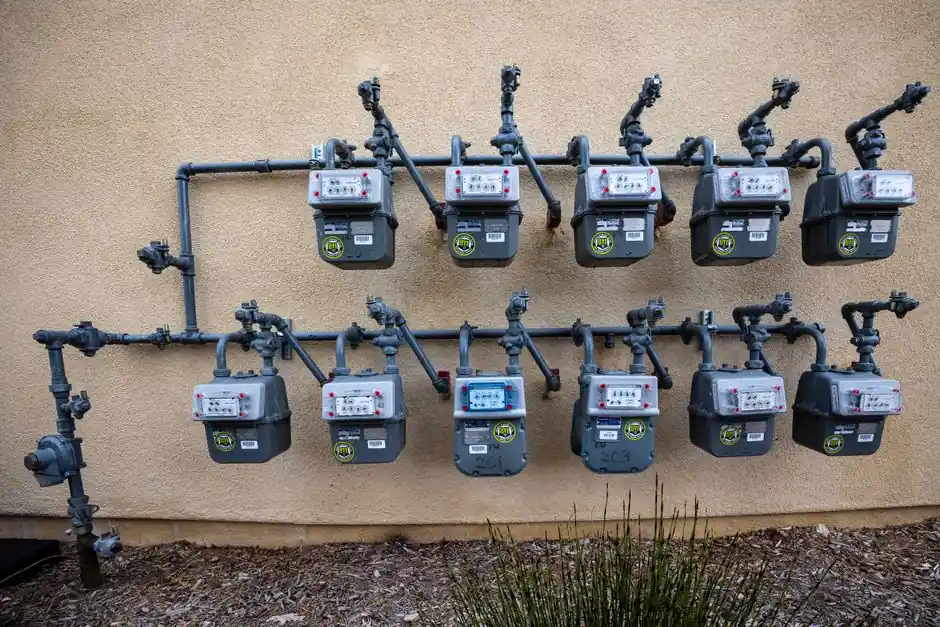
Descaling cast iron with water
How jetting restores mid-century drain lines
Hydro jetting cleans pipe interiors with pressurized water delivered through a specialized nozzle on a flexible hose. Rear jets drive the hose forward through the line; forward jets blast the walls. In a cast-iron system, that blasting action does something no cable can: it shears mineral scale and hardened deposits off the pipe wall itself, flushing them downstream and leaving the iron's actual surface exposed. Done at pressure matched to the pipe's condition — verified by camera first — it's the most effective restoration available for scaled pipe short of replacement.
Signs your cast iron needs jetting
The same drain clogs on a shrinking schedule
Six months between clogs, then three, then six weeks — the accelerating cycle is scale's signature. Each snaking clears the immediate blockage but leaves the narrowed, rough pipe that manufactures the next one. When the interval between clearings keeps shrinking, you're not having bad luck with clogs; you're watching scale win. Jetting breaks the cycle by removing the scale, not just the latest clog.
Whole-house drainage that's gradually worsening
Scale doesn't confine itself to one fixture — it develops throughout the cast iron system simultaneously. When toilets flush a little weaker, tubs drain a little slower, and sinks gurgle a little more, all trending worse over the years, that's systemic scaling. Snaking individual fixtures treats symptoms scattered across the house; jetting the main and branches addresses the system-wide condition causing them.
A camera that shows heavy scale
Sometimes the sign isn't a symptom — it's a picture. If a previous camera inspection showed heavy scaling, rough interiors, or significantly reduced diameter, jetting is the direct response to that evidence. Descaling a good candidate transforms the footage: the "after" video shows actual pipe surface where the "before" showed only crust. It's the most satisfying before-and-after in drain work.
The descaling visit, step by step
Inspect, descale, verify — in that order
With sixty-year-old pipe, sequence is safety. The camera must go first — not as an upsell, but as the structural assessment that determines whether jetting is appropriate at all, and at what pressure. Then the descaling passes, calibrated to your pipe's actual condition. Then the camera again, documenting both the cleaning and the wall condition revealed beneath the scale. Skip the first camera and you're gambling; we don't gamble with your pipes.
- 01 Structural camera assessment We inspect the full run to map scale severity and — critically — wall condition. Sound iron with heavy scale is an ideal jetting candidate. Thin, flaking, or cracked walls mean jetting could do harm, and we'll tell you so honestly and discuss the real options instead. This assessment is the most important part of the visit.
- 02 Staged setup with care for old access points We position the unit and run hose to your cleanout, handling original fittings and access points gently. Sixty-year-old threads and caps get patience, not force — a descaling service should never create new problems while solving old ones.
- 03 Calibrated descaling passes The nozzle works through the line at pressure matched to your pipe's assessed condition — assertive where walls are sound, conservative where they're marginal. Descaling heads strip mineral buildup in controlled passes; the technician monitors progress and adjusts. This is judgment work: the same pressure that's perfect for sound iron would be reckless on thin spots.
- 04 Verification and condition report The camera returns, and you see descaled pipe on the monitor — the actual iron, the restored diameter, the free flow. We document the wall condition revealed beneath the scale, because that assessment now drives your long-term plan: maintain, monitor, or start planning capital work. You leave with clean pipes and a real understanding of them.
What descaling buys you
The payoff is measured in years and in options. A descaled line drains like a larger pipe — fixtures throughout the house improve at once, because the restriction was systemic. The repeat-clog cycle breaks, often for years. And the revealed wall condition gives you something no symptom ever could: a factual basis for planning. Sound walls under the scale mean your pipes have real life left; thin walls mean you can plan replacement on your timeline instead of discovering it at midnight. Either way, you're deciding from knowledge instead of guessing from symptoms.
Request a quoteEquipment for cast-iron descaling
Precision-controlled jetting unit
For cast iron work, the unit's defining virtue is adjustability. Descaling needs enough pressure to shear mineral deposits — but "enough" varies along a sixty-year-old line, and the difference between effective and destructive is real. Professional units give the technician fine control over pressure and flow, so each section gets what its condition warrants. This is the opposite of a pressure washer; it's a calibrated instrument.
Descaling and specialty nozzles
Standard jetting nozzles clean soft buildup; descaling old iron needs more aggressive tooling — rotating heads that scour in a spiral, chain-flail style heads for heavy mineral deposits, each selected for the scale character the camera revealed. We carry the range and choose per-section, because a line with heavy scale at the kitchen branch and light scale at the main deserves different treatment at each.
Hose rated for the work
Descaling pressures demand hose engineered for the job — flexible enough to track an old line's settled joints and bends, tough enough to contain the pressure safely throughout. It's specialized professional equipment, and its absence is one of the many reasons descaling is never a DIY undertaking.
Camera: the safety system
On cast iron, the camera does triple duty: pre-job structural assessment (is this pipe a candidate?), intra-job guidance (how's the wall holding up as scale comes off?), and post-job verification (what's the revealed condition?). Any descaling proposal for old pipe that doesn't center the camera at all three stages should be refused. The camera is what makes this restoration instead of roulette.
Descaling across Bedford's mid-century neighborhoods
Hydro jetting descaling proves its value throughout Bedford's mid-century housing stock — the ranch homes with original cast iron stacks, the kitchen branches that have fed families since the sixties, the mains carrying sixty years of accumulation. Wherever the problem is the pipe's interior condition rather than a discrete blockage, descaling is the appropriate intervention: it treats the disease (scale) instead of the symptom (the latest clog).
Where cast-iron descaling matters most in Bedford
- Bedford East Corridor
- Downtown Bedford Area
- Historic Downtown Main Street
- Bedford Heights
See scale come off on camera
Cast-iron jetting available in Bedford
Emergency descaling when it can't wait
A fully blocked scaled line doesn't observe business hours, and when the blockage is scale-related, jetting is often the only effective emergency response — a snake through heavy scale just postpones the inevitable by days. We bring the full descaling setup with camera verification, because even in an emergency, old pipe deserves the assessment-first approach. Call and describe the situation; we'll tell you straight what your line needs.
Your descaling appointment, step by step
The assessment comes first
The camera goes in before anything else, and we show you what it finds — the scale, the wall condition, the candidacy verdict. If your pipe is a good descaling candidate, we explain the plan and the pressure approach. If it isn't — walls too thin, structural damage — we explain that instead, with the footage as evidence, and discuss the honest alternatives. You never pay for jetting on a pipe that shouldn't be jetted.
The descaling work
With candidacy confirmed, the hose goes in and the calibrated passes begin — methodical, monitored, adjusted to what each section reveals. In a heavily scaled line the progress is visible in real time on the camera monitor: crust giving way to actual pipe surface, diameter visibly restoring. Most residential descaling completes in a single visit, and the improvement at every fixture is immediate.
Proof and planning
The final camera run shows descaled pipe, and the condition revealed beneath the scale becomes your planning document: sound walls mean years of service ahead with maintenance; marginal walls mean monitored service with capital planning on your timeline. You get the footage, the assessment, and a straight recommendation — the complete picture that a simple "it's clear now" never provides.
What descaling costs depend on
Descaling costs more than a standard snaking — the assessment, the specialized tooling, and the verification are real work. What you're buying is measured in restored diameter and years of relief, not just a cleared clog. Your specific price depends on straightforward factors, and we'll identify exactly which apply to your line before work begins.
Scale severity and pipe length
Light scale on a short branch is a quick job; heavy mineral deposits through a long main with sixty years of accumulation is a substantial operation — more passes, more time, more water. The assessment camera shows us the scale's character before we quote, so the scope matches the reality.
Wall condition and required care
Sound walls allow efficient, assertive descaling; marginal walls demand slower, more careful work with frequent camera checks. The condition that makes your pipe a candidate also shapes the job's complexity — and we'll explain exactly how your pipe's condition affects the approach.
Access to the system
A clear exterior cleanout means fast staging; older homes with buried or awkward cleanouts take longer to set up. Tell us what you know about your cleanout when you call — it helps us plan the visit efficiently and quote accurately.
Before you book descaling
Cast-iron jetting questions
What exactly is hydro jetting descaling?
It's the use of high-pressure water, through specialized nozzles, to strip mineral scale and hardened deposits off the inside of pipes — particularly cast iron, where scale is the defining age-related problem. Unlike snaking, which bores through blockages, descaling removes the buildup from the pipe walls themselves, restoring diameter. Think of it as sandblasting with water: the deposits come off, the sound pipe underneath remains.
Is it safe for sixty-year-old cast iron?
For pipe with sound walls, yes — and it's often the best thing that can happen to old iron. The safety is entirely in the process: the pre-job camera assesses wall condition first, pressure is calibrated to what your specific pipe can handle, and marginal sections get a conservative approach or are excluded. Pipe that's too far gone gets an honest verdict instead of a risky jetting. The camera is what makes it safe.
How is this different from regular drain snaking?
Snaking cuts a path through the center of a blockage; the scale lining the walls — the actual disease in old iron — stays untouched, so clogs return on a shrinking schedule. Descaling removes the scale itself, treating the underlying condition. If your cast iron keeps clogging faster each time, you've been treating symptoms; descaling treats the cause.
Can jetting remove roots from my clay lateral too?
Yes, as a complement to mechanical cutting: jetting shears the fine root tendrils that invade through clay joints and scours the joint clean afterward, which plain cutting doesn't fully achieve. For heavy established root masses, cutting comes first and jetting follows. The camera sequences it — we treat what your lateral actually has, in the right order.
How long will descaling last?
Years, typically — because you've removed the accumulation, not just the latest clog. Scale does reform over time (it's the nature of cast iron), but the reformation starts from bare pipe, not from an already-narrowed base. The interval depends on water chemistry and usage; the camera check every few years tracks the reformation rate and tells you when the next descaling is due. It's maintenance with a measurable cycle, not a mystery.
Could descaling reveal my pipes need replacement?
Honestly, yes — and that's a feature, not a failure. Descaling strips away the scale that's been hiding the wall's true condition; occasionally what's revealed is pipe too thin or damaged to trust. Finding that out during a planned descaling, with time to plan and budget, is vastly better than finding it during a midnight backup. The camera gives you the truth either way, on your schedule.
Related services
Drain Cleaning
For everyday clogs in any era of plumbing, standard drain cleaning clears blockages and verifies flow — the right first response when scale isn't yet the story.
Drain Camera Inspection
The assessment that starts everything: our camera inspection shows your cast iron's actual scale depth and wall condition on video — the evidence that determines whether descaling, maintenance, or planning is next.
Ready to restore your cast iron? Call today
Stop treating scale symptoms with repeat snakings. Call (817) 285-5688 for a camera assessment of your Bedford home's cast iron — we'll show you exactly what's in there, descale what's salvageable, and give you the honest verdict on what your pipes need next.